
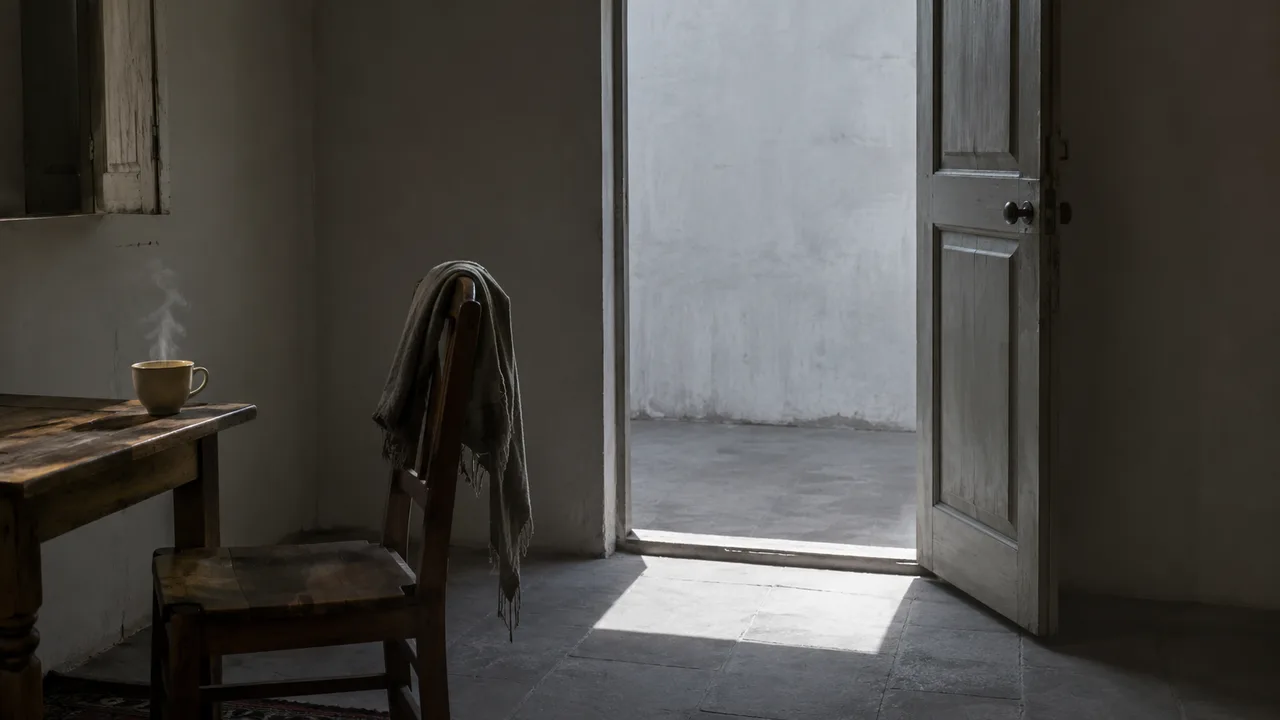
The one appointment no person has ever missed. Yet the Quran does not paint him as a villain, and the verse about his work does not end where you expect.
There is one meeting that every human being who has ever lived has kept, and every human being alive today still has scheduled. Kings and infants, the famous and the forgotten, everyone arrives at it eventually and no one arrives late. It is the meeting with the angel of death. And because it frightens us, we have wrapped him in dread, imagined him as a kind of cosmic enemy coming to snatch us away. But the Quran describes him very differently, as an obedient servant carrying out an assignment, and the single verse that names his work does not end where our fear expects it to. It ends with a homecoming.
Start with a small correction, because it matters. Many people know this angel by the name Azrael, and speak it as though the Quran gave it. It did not. Neither the Quran nor the teachings of the Prophet Muhammad ﷺ call him Azrael. That name entered Muslim usage from older traditions, not from revelation. What Allah actually calls him is simply malak al-mawt, the angel of death, a title that describes his task rather than a personal name we were handed. It is worth holding to what was revealed and letting go of what was merely inherited, so that our picture of the unseen stays clean.
The clearest verse about him is short and full of meaning. "Say, The angel of death who has been entrusted with you will take you. Then to your Lord you will be returned" (32:11). Look at the word entrusted. He has been given a trust, an assignment. He does not act on his own initiative, does not decide who dies or when, does not choose his moments out of malice or appetite. He is entrusted, meaning someone above him set the terms and he carries them out faithfully. The timing of every death belongs to Allah, written and appointed, and the angel is the one who executes a decree he did not write.
The Quran shows us this obedience in a striking scene. The angel of death was once sent to Musa (AS), and Musa, not knowing him, struck him and put out his eye. The angel did not retaliate. He returned to his Lord and reported what had happened, was restored, and came back with a further message about lifespan (Sahih al-Bukhari 1339). An independent power would have answered a blow with a blow. This is a servant who takes his instructions back to the One who sent him. That single detail dissolves the image of the angel as a menace. He is under command, not in command.
The Quran layers this further, because in one place it is the angel who takes the soul, and in another it is Allah Himself. "Allah takes the souls at the time of their death, and those that do not die during their sleep. Then He keeps those for which He has decreed death and releases the others for a specified term" (39:42). Both are true at once. Allah is the ultimate Taker of souls, and the angel of death is the appointed agent through whom He takes them, exactly as a king can be said to do what his trusted servant does at his order. When your time comes, it is Allah reclaiming what was always His, delivered by a servant He assigned.
That same verse hides a gentle mercy that most people sleep straight through, literally. It says Allah takes the souls of those who die, and also of those who do not yet die, during their sleep. Sleep is described as a lesser version of the same event, a soul lifted and then, for those whose time has not come, released again to wake. Every night you lie down and something like death happens to you, and every morning you are handed your life back. It is a small daily rehearsal for the real appointment, and a small daily proof that the One who returns your soul at dawn can be trusted to handle it at the end. If He gives it back every morning without fail, the final taking is not a robbery. It is the same hand that has been returning you to yourself your whole life.
Here is the heart of it, and it is easy to miss. Read the death verse again and watch where it stops. "The angel of death who has been entrusted with you will take you. Then to your Lord you will be returned" (32:11). It does not end with you will be taken, full stop, as if being taken were the whole event. It ends with then to your Lord you will be returned. The taking is not a destination. It is a transport. The angel of death is not the end of your story, he is the one who carries you from one place to the next, out of this world and back to the One who made you. Returned is the operative word, and you cannot be returned somewhere you did not come from. You came from Allah, and the angel of death is simply the servant assigned to bring you home.
So who is the angel of death? He is a faithful servant of Allah, entrusted with a single task, who takes no soul before its written moment and takes none out of cruelty. He is not the author of your death and not its owner, only its appointed messenger. We were never told his name, only his work, and his work, when the Quran describes it, is not to destroy you but to return you. The meeting is certain, and no one has ever missed it, but it is not an ambush by an enemy. It is a servant arriving on time to carry you back to your Lord. The believer who understands that stops bracing against the angel as though he were the danger, and starts preparing instead for the One at the other end of the journey, because the angel is only the road, and Allah is the destination.
Silsila Research Desk
Grade: Sahih · 6 min read