The Quran warns of a smoke that covers the sky, and scholars disagreed on what it is. Under both readings sits the same hard truth about faith under pressure.
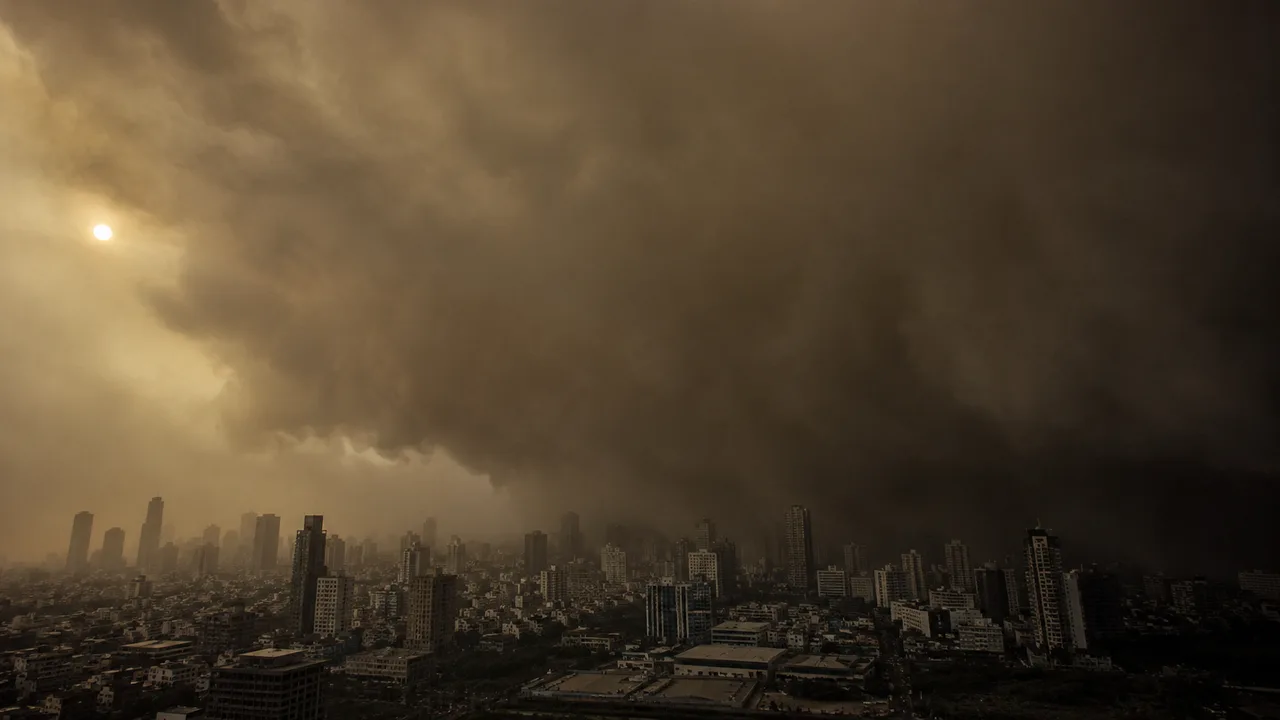
The Quran tells the Prophet Muhammad ﷺ to watch for a day when the sky brings a visible smoke that covers the people, and it calls that smoke a painful torment. It is one of the signs associated with the end of the world in the teachings of the Prophet ﷺ, and it is also one of the rare cases where the great scholars of Islam genuinely disagreed about what a passage refers to. Rather than paper over that disagreement, it is more honest and more useful to lay it out plainly, because the two readings do not cancel each other, and beneath both of them sits the same uncomfortable truth about the kind of faith that only appears when a person is under the lash.
Here is what the Quran says. "Then watch for the Day when the sky will bring a visible smoke, covering the people; this is a painful torment. They will say, Our Lord, remove from us the torment; indeed, we are believers. How will there be for them a reminder, when there had come to them a clear Messenger? Then they turned away from him and said, He was taught, a madman. Indeed, We will remove the torment for a little. Indeed, you will return to disbelief. The Day We will strike with the greatest assault, indeed, We will take retribution" (44:10 to 16).
Read the whole sequence, because the emotional arc is the point. A smoke descends and torments the people. Under it, they cry out and promise faith: remove this and we will believe. The response is almost weary: how will a reminder reach you now, when a clear Messenger already came and you called him a madman and turned away? Then a promise that the torment will be lifted a little, and a prediction that they will simply go back to how they were. And finally a warning of a far greater seizure to come.
So what is this smoke? Here the paths divide, and both are held by serious scholarship.
One major view, reported from the companion Ibn Mas'ud and recorded in Sahih al-Bukhari, is that the smoke has already happened. When the Quraysh persisted in opposing the Prophet ﷺ, a severe famine gripped them, so crushing that a hungry man would look up at the sky and see it as if filled with a haze or smoke, his vision swimming from starvation. In their distress they came begging for the punishment to be lifted, promising belief, and when relief came they returned to their rejection, exactly as the verses describe. On this reading, the smoke was a historical affliction of the Prophet's ﷺ own opponents, and verse 15, we will remove it a little, indeed you will return, fits that story precisely.
The other major view is that the smoke is still to come, a real smoke that is one of the great signs of the Hour. The Prophet ﷺ listed the dukhan, the smoke, among ten major signs that will precede the final Hour, alongside the Dajjal and the Beast of the Earth and the rising of the sun from the west (Sahih Muslim 2901). On this reading, the verses point to a future event near the end of the world, when a literal smoke will cover humanity as one of the last warnings before the end.
Some scholars held that there is truth in both, that a smoke afflicted the Quraysh in the past and a greater smoke is yet to come as a sign of the end. The honest position is not to force a single verdict where the scholarship carried more than one. When the sources disagree, we present the disagreement as disagreement, and we do not pretend to a certainty that the scholars themselves did not claim.
What is striking is that the moral of the passage does not depend on settling the debate. Whether the smoke was a past famine or a future sign, the human behaviour the verses expose is exactly the same, and it is painfully familiar. Under torment, the people suddenly become believers. Our Lord, remove this and we will believe. And the moment the pressure eases, they return to precisely what they were before. Their faith was not faith. It was a bargaining chip, produced under duress and withdrawn the instant the duress lifted.
This is one of the most important warnings in the Quran about the nature of belief, because it exposes a trap almost everyone is prone to. It is easy to turn to Allah in the crisis, to pray hard in the hospital corridor, to make promises in the turbulence and the emergency. That instinct is real, but the Quran is warning that faith which exists only under pressure is not yet real faith, because it dissolves the moment the pressure is gone. The people under the smoke were sincere in their terror and false in their commitment, and the verses see straight through them. How will a reminder reach you now, they are asked, when the reminder already came in calm times and you rejected it? Belief offered only when you are cornered is not the belief Allah is looking for.
That is the challenge the smoke leaves with every reader, regardless of which interpretation is correct. The real test of faith is not whether you cry out to Allah when the sky turns to smoke. Almost everyone will. The test is whether you turn to Him now, in ordinary time, when nothing is forcing your hand, when the clear message is in front of you and no torment is pressing on your back. The people in the passage failed not because they refused to believe under torment, but because that was the only time they were willing to. Their faith arrived too late and left too early.
So what is the smoke of the end times? It is a torment covering the sky that the Quran commands us to watch for, understood by some as a past affliction of the Prophet's ﷺ enemies and by others as a future sign of the Hour, and possibly both. But its lesson needs no resolution of that question. It is a mirror held up to the kind of belief that only speaks under threat, and a call to become the kind of person whose faith does not wait for the smoke, because a heart that will only turn to Allah when it is choking has not truly turned to Him at all.
Silsila Research Desk
Grade: Sahih · 6 min read