The realm between your last breath and the resurrection, defined by one request every person makes and no person is ever granted: send me back.
There is a stretch of time that every human being enters and no human being has ever come back from to tell us about, and the Quran gives it a name. It is the barzakh, the realm that begins the moment the soul leaves the body and does not end until the Day everyone is raised. We spend our whole lives thinking of death as an ending, a full stop, and then the Quran reveals that it is not an ending at all but a doorway into a long waiting, a place with its own reality where the dead remain until the resurrection. And the single most important thing the Quran tells us about the barzakh is contained in one desperate sentence that every person will say and no person will be answered.
The Quran lets us hear the moment of dying from the inside, and it is one of the most sobering passages in the whole Book. "Until, when death comes to one of them, he says, My Lord, send me back, that I might do righteousness in that which I left behind" (23:99 to 100). At the edge of death, when the reality of what is coming finally becomes undeniable, the human being asks for the one thing he cannot have. Send me back. Give me the time again. Let me return and do the good I did not do, fix what I left broken, pray the prayers I skipped, repair the relationships I ruined. It is the most natural request in existence, and it is far too late.
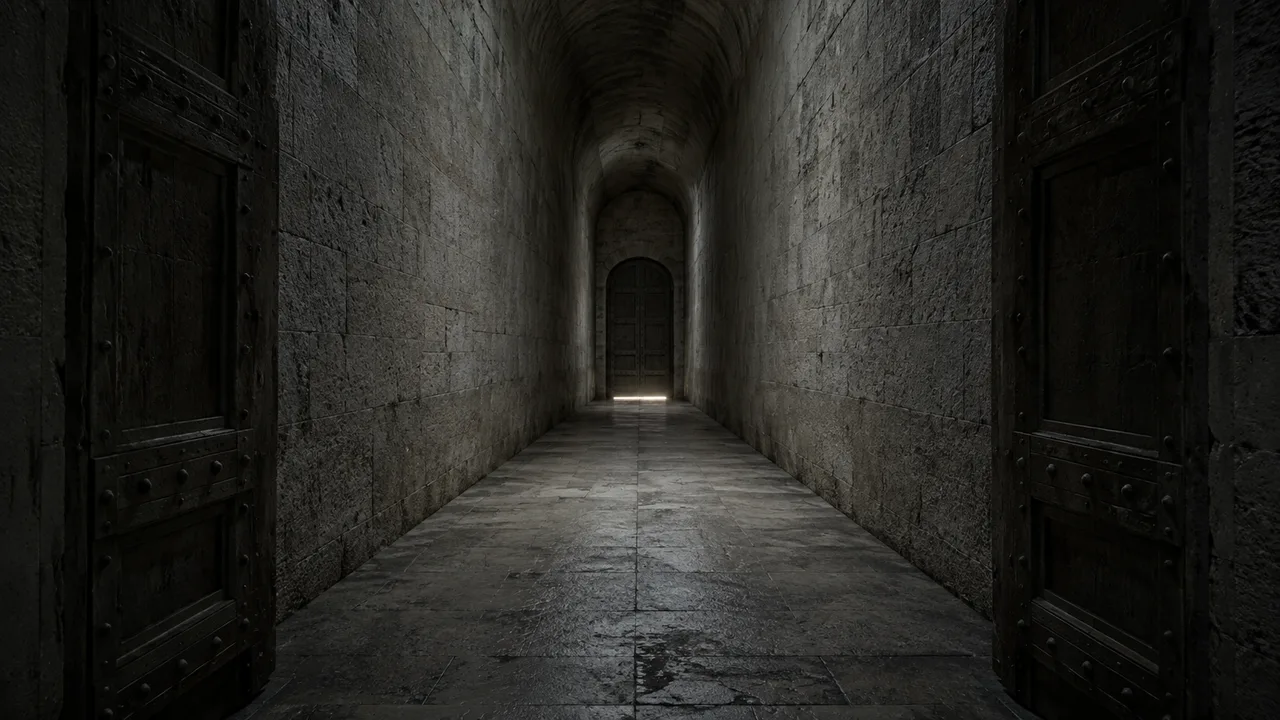
And then comes the answer, and it is a wall. "No! It is only a word he is saying; and behind them is a barrier until the Day they are resurrected" (23:100). The word for that barrier is barzakh. It is a partition that stands between the dead and the world they left, and it has one terrible feature: it only opens in one direction. The soul passes through it going out of this life, and it cannot pass back. There is no return button. The barzakh is the answer to the prayer send me back, and the answer is no, permanently, until the resurrection.
Sit with what that means, because it changes how you should think about time. Every other door in life has a way back. You can leave a place and return, lose money and earn it again, break a thing and mend it, waste a day and be given another. The barzakh is the single door in the whole of existence that has no way back. Once you are through it, everything you meant to do and did not, everything you postponed until later, is sealed on the other side, out of reach. The barrier does not open for regret, no matter how sincere. It stands until the Day of Resurrection, and not a moment sooner.
This is precisely why the Quran shows us the dying man's plea. It is not to describe his afterlife to us. It is to reach us now, while the door is still open, while send me back is not yet the only sentence we have left. The person begging to be returned is begging for exactly the time you are holding in your hands as you read this. The barzakh turns every unused hour of the living into something almost unbearably valuable, because it is the thing the dead would give anything to have back and cannot.
Some imagine the time between death and resurrection as a blank unconsciousness, a nothing until the trumpet. The Quran corrects that with a chilling glimpse. Speaking of the people of Pharaoh after their destruction, it says they were "enveloped by the worst of punishment: the Fire; they are exposed to it morning and evening" (40:45 to 46). Morning and evening, before the Day of Judgment has even arrived. This is happening in the barzakh, in the interval, which means the barzakh is not an empty pause. It is a real state, with real consequence, where the soul already tastes something of what its life earned. The commentators drew from this that the barzakh holds both punishment and, for the faithful, ease, long before the final reckoning. The waiting is not neutral. It has already begun to be either a garden or a fire.
The grave is understood as the first stage of this barzakh, which is why the earlier article on what happens in the grave belongs beside this one. The questioning, the widening or the tightening of the resting place, all of it unfolds inside the barzakh, in the long interval between the last breath and the first blast of the horn.
The Quran gives us one more scene from the far side of the barrier, and it completes the warning. The people who wasted their chance will one day say, "Our Lord, You made us lifeless twice and gave us life twice, and we have confessed our sins. So is there to an exit any way?" (40:11). Now they confess. Now they admit everything. But the confession comes from behind the barrier, and it changes nothing, because the time for confession that counts was on the other side, in the life they have already left. The barzakh is full of clear-eyed regret that arrived one door too late.
It would be easy to read all of this as pure fear, but there is a mercy folded inside it, and it is the whole reason the Quran tells us. You are still on the near side of the barrier. The door has not closed. The very thing the dying man screams for, more time, more chances, a return to the world of deeds, is the thing you have right now and he does not. So what is the barzakh? It is the realm between death and resurrection, sealed off by a partition that only opens forward, where the soul already begins to taste its outcome, and where every person eventually says send me back and is not sent back. Its lesson is not really about the dead. It is a message hand-delivered to the living, and the message is simple and urgent: do it now, while now is still yours, because on the other side of the barzakh, the only prayer left is the one that is never answered.
Silsila Research Desk
Grade: Sahih · 6 min read