
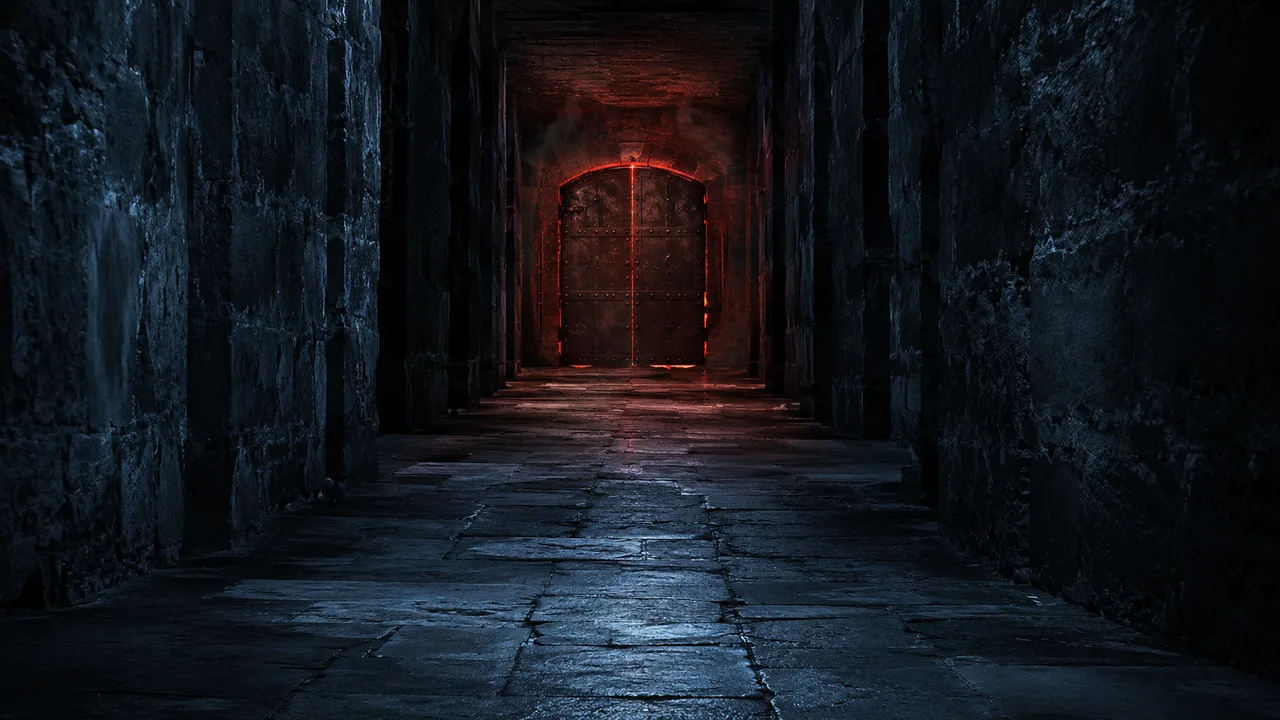
A fire that almost bursts with rage, a gatekeeper named Malik, and one request its people make forever. What the sources actually say about Hell.
The first thing they notice is the sound. Before the heat registers, before the eyes adjust, the Qur'an says the arrivals hear the place breathe: "When they are thrown into it, they hear from it a dreadful inhaling while it boils up. It almost bursts with rage" (67:7-8). Rage. Not a furnace, not a mechanism: something closer to a living guard dog straining against its chain. That is the single most unnerving fact the sources give about Jahannam, and it reframes the whole question. Ask "what is Hell like" and you expect an inventory of temperatures. What the Qur'an describes instead is a place with something like fury in it, fury at the people who were warned, and warned, and walked in anyway. What follows is the sourced picture, no folklore added, and it should be read the way the texts intend: not as horror for its own sake, but as the most expensive road sign ever posted.
The Qur'an films the intake scene: "And those who disbelieved will be driven to Hell in groups until, when they reach it, its gates are opened and its keepers will say: Did there not come to you messengers from yourselves, reciting to you the verses of your Lord and warning you of the meeting of this Day of yours? They will say: Yes" (39:71).
Yes. Sit with that answer. Nobody at the gate claims they were not told. The keepers ask the same question of every company thrown in, "Did there not come to you a warner?" (67:8), and the record always shows the warner came. The horror of the scene is not the gates; it is the absence of a single valid excuse passing through them. Then the sentence: "Enter the gates of Hell to abide eternally therein, and wretched is the residence of the arrogant" (39:72). The Qur'an names the disease at the door: arrogance, the refusal that dressed itself up as skepticism.
The Prophet ﷺ gave the conversion rate. "Your fire," he said of every flame we know, "is one of seventy parts of the Fire of Hell." The companions answered the way you would: this fire of ours would have been enough. He replied that the Fire exceeds it by sixty nine parts, every one of them equal to it in heat.
Read your own kitchen into that. The flame that makes you snatch your hand back at half a second of contact is the unit, and the exchange rate is seventy. And the hadith about the lightest sentence makes the scale personal: the least punished person will stand on two embers, and his brain will boil, and he will believe with total conviction that nobody is being punished worse than him. The mildest case cannot imagine a milder one.
One narration may be the most psychologically frightening line in the whole file. The most affluent person who ever lived, the one who had everything this world sells, will be dipped into the Fire once, one dip, and then asked: son of Adam, have you ever seen any good? Has any delight ever passed you? And he will say: No, by Allah, my Lord.
One dip deletes a lifetime of five-star mornings. Whatever pleasure you are currently weighing against the risk, that is its resale value on the other side: one second of contact and the memory of it is not even available to comfort you.
The Qur'an records the long-term condition of the people inside: "It will not be allowed to subside for them, and they, therein, are in despair" (43:75). And their skins are not permitted to grow numb: "Every time their skins are roasted through, We will replace them with other skins so they may taste the punishment" (4:56). No adaptation. No settling in.
Then comes the conversation that ends all conversations. The inhabitants call out to the keeper of the Fire, by name: "O Malik, let your Lord put an end to us!" They are no longer asking for release. They are asking for non-existence, the one mercy left to want. His answer is two words wide and eternal: "Indeed, you will remain" (43:77). And lest anyone misread the whole arrangement as cruelty, the verse before it closes the ledger: "And We did not wrong them, but it was they who were the wrongdoers" (43:76).
Here is the question worth asking at the end: why would a merciful God publish this material at all? Because a warning withheld is not mercy. Every verse above was revealed to people still breathing, still able to turn around, which includes every person reading this. The Qur'an's descriptions of Jahannam are not the minutes of a decided verdict; they are the world's most serious advertisement for the door marked repentance, which stays open as long as you do.
The believers who took these verses seriously did not become paralyzed people. They became people who prayed at night, dropped grudges quickly, and gave in secret, because they had read the exchange rate and done the arithmetic. Fear, in the Qur'an's economy, is not the opposite of hope. It is the thing that makes you grip hope properly, with both hands.
Silsila Research Desk
Grade: Sahih · 7 min read