
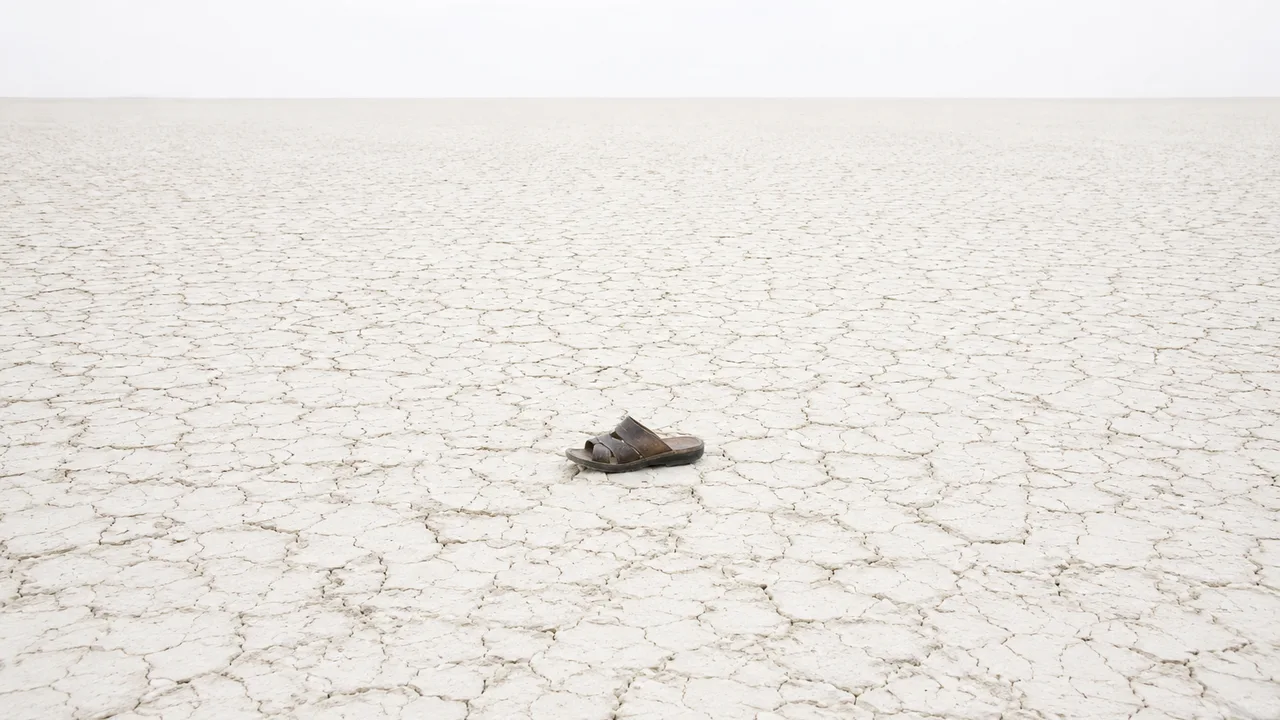
Two blasts of a trumpet, a book that forgot nothing, and a scale that weighs a mustard seed. The sourced sequence of the longest day there will ever be.
It begins with a sound. One blast of the Horn, and every living thing in the heavens and the earth drops where it stands. "And the Horn will be blown, and whoever is in the heavens and whoever is on the earth will fall dead except whom Allah wills. Then it will be blown again, and at once they will be standing, looking on" (39:68). Standing, looking on. That is you in the verse, and me: every human being who ever lived, back on their feet in a single moment, eyes adjusting to a day with no sunset scheduled. So what actually happens on the Day of Judgment? The Qur'an and the Prophet ﷺ left us the sequence in unusual detail, and it runs like this: the gathering, the sun brought close, the book you wrote without knowing, the scale that misses nothing, and a verdict from a Lord who "does injustice to no one" (18:49). Walk through it now, slowly, while walking through it is still optional.
The resurrection empties every grave onto one plain, and the first shock is social. Every bond you leaned on in this world goes silent: "On the Day a man will flee from his brother, and his mother and his father, and his wife and his children. For every man, that Day, will be a matter adequate for him" (80:34-37).
Flee, the verse says. Not drift from, flee. The mother who would have taken a blade for you cannot take a single deed from you, and she knows it, and you know it, and both of you have cases of your own. "A matter adequate for him" may be the most quietly terrifying phrase in the Qur'an: everyone finally has a problem big enough to make every other person on earth irrelevant.
The Prophet ﷺ added the physics of the plain. The sun is drawn near, and mankind sweats by the measure of their deeds: some to the ankles, some to the knees, some to the waist, and some bridled by their own sweat to the mouth. Deeds, made suddenly physical. And on that plain there is shade for exactly one kind of person; he ﷺ counted seven who earn the shade of the Throne, among them a youth who grew up in worship and a giver whose left hand never learned what the right hand spent.
Then the records come out, and the Qur'an preserves the exact words of the people flipping through their own pages: "Oh, woe to us! What is this book that leaves nothing small or great except that it has enumerated it?" (18:49). They will find what they did, present, the verse says. Not summarized. Present.
Every human being has two selves: the curated one others saw, and the full transcript. The Day of Judgment is the day the transcript publishes. The sarcastic word from eleven years ago, the coin given quietly, the tab you thought you closed: enumerated. And one narration describes the exit interview attached to it: a servant's feet will not move until he answers for his life and how he spent it, his knowledge and what he did with it, his wealth, where it came from and where it went, and his body, how he wore it out.
After the record, the weighing, and here the Qur'an makes a promise that cuts both ways: "And We place the scales of justice for the Day of Resurrection, so no soul will be treated unjustly at all. And if there is even the weight of a mustard seed, We will bring it forth. And sufficient are We as accountant" (21:47).
A mustard seed. The smallest thing a desert audience could picture, and the scale registers it. Surah az-Zalzalah shrinks the unit further: "So whoever does an atom's weight of good will see it, and whoever does an atom's weight of evil will see it" (99:7-8). Read the mercy hiding inside the threat. The same sensitivity that catches your smallest sin catches your smallest kindness. The door you held. The insult you swallowed. The two rak'ahs nobody saw at 2am. Nothing you ever did in the dark was wasted; it was banked.
Then the people depart, "separated into categories, to be shown their deeds" (99:6). Beyond the weighing lie further stations the Prophet ﷺ described, and at the end of every path, one of two homes. But before the sequence closes, go back and notice the sentence the Qur'an attached to the scene of the book: "And your Lord does injustice to no one" (18:49).
That is the axis the whole Day turns on. This is not a trial where evidence might be mishandled or the judge might be having a bad morning. Every fear in these verses comes from the completeness of the justice, and every hope comes from the character of the Judge, the same One who spent your whole life forgiving faster than you could apologize.
Here is the strangest fact about the Day of Judgment: it is the only exam in existence whose questions were published in advance. Your life, your knowledge, your wealth, your body. Four questions, on record, centuries early. Most disasters give no warning. This one has sent warnings for over fourteen hundred years, which means today, whatever else it is, is one more day on the right side of the trumpet: time enough to add an atom's weight to the correct pan of the scale.
Silsila Research Desk
Grade: Sahih · 7 min read