Revealed to a grieving father just mocked as a man with no future. Allah answered the insult not with an argument, but with a river and a promise.
The shortest chapter in the Quran is three short verses long, and it was sent down into one of the most painful seasons of the Prophet Muhammad's ﷺ life. His young sons had died. And in a society that measured a man's worth by the sons who would carry his name, his enemies seized on the grief and threw it back at him, calling him abtar, cut off, a man whose line and legacy would end with him, a future amputated. Into that wound Allah revealed Surah al-Kawthar, and the way He answered is one of the most tender and most devastating replies in the entire Book. He did not argue with the insult. He buried it under a gift.
Here is the whole surah. "Indeed, We have granted you, O Muhammad, al-Kawthar. So pray to your Lord and offer sacrifice to Him alone. Indeed, your enemy is the one cut off" (108:1 to 3).
Read it as the man who first received it would have heard it. He is grieving his children. He is being told, to his face, that he is finished, that he has no future, that his name dies with him. And the first word of Allah's response is not a defence and not a rebuke of the enemy. It is a giving. We have granted you. Before anything else, Allah moves to place a gift in the hands of a man the world has just tried to empty. The comfort does not come as a lecture on patience. It comes as abundance, handed over immediately.
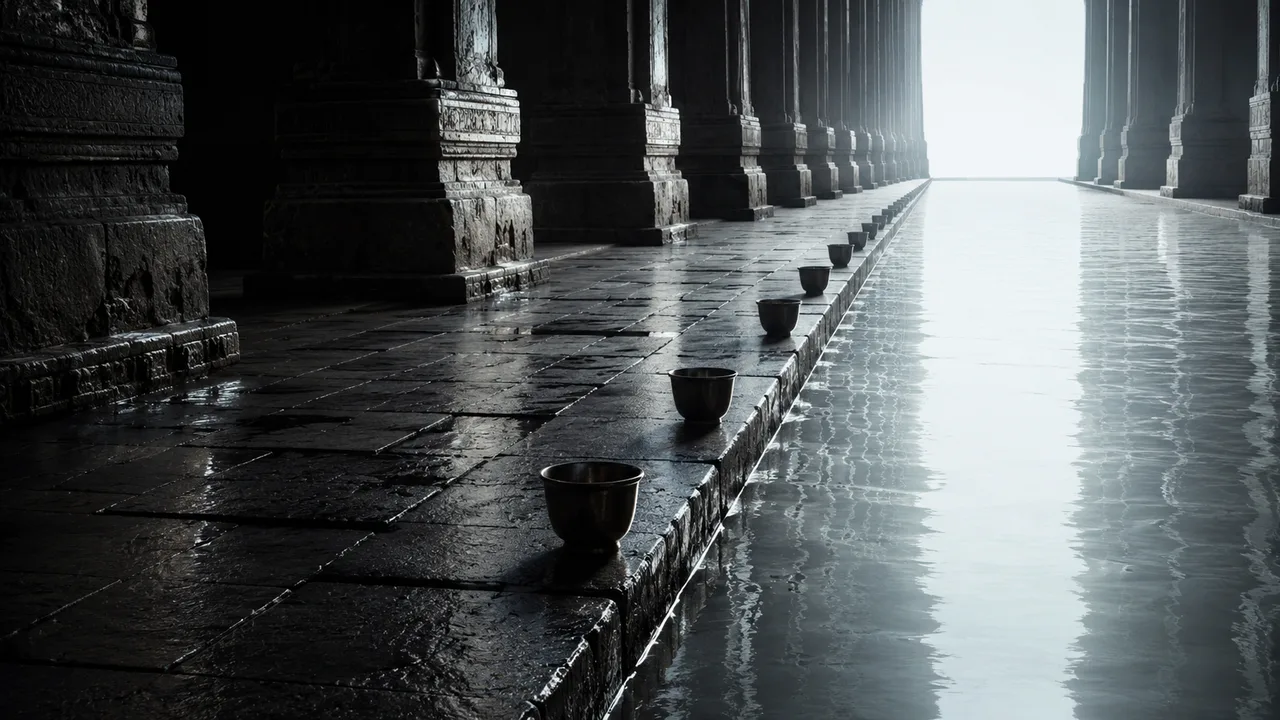
The word al-Kawthar itself is built from the root of abundance, and it means a great, overflowing amount of good. Allah is telling the Prophet ﷺ that far from being cut off, he has been given good beyond counting. But when the Prophet ﷺ was asked what al-Kawthar was, he gave it a specific and breathtaking shape. He said it is a river his Lord promised him in Paradise, carrying much good, feeding a basin his community would come to on the Day of Resurrection, with vessels as numerous as the stars in the sky (Sahih Muslim 400).
So the abundance is not only a concept. It is a river in Paradise with the Prophet's ﷺ name on it, and attached to it is a basin, the Hawd, for his people. He described that basin too: its water whiter than milk, its fragrance sweeter than musk, and whoever drinks from it once will never feel thirst again (Sahih al-Bukhari 6581). The man they called cut off was in fact given a river, and a place at that river for every believer who follows him across the centuries.
The middle verse is easy to rush past, but it holds the whole logic of the surah. "So pray to your Lord and offer sacrifice to Him alone" (108:2). When you have just been given abundance from Allah, what is the correct response? Not pride, not gloating over the enemy, but worship. Turn to the One who gave it, in prayer and in sacrifice, and give it back to Him in gratitude. The gift is met with devotion, and the devotion is aimed at Allah alone. Even in a surah of comfort, the thread of pure worship runs straight through the middle.
Then comes the final verse, and it is where the quiet devastation lands. "Indeed, your enemy is the one cut off" (108:3). The word the enemies had hurled at the Prophet ﷺ, abtar, cut off, Allah lifts up and sets back down on the enemies themselves. You called him the one with no future. Look again. It is you who are cut off. And history performed the verse. The names of the men who mocked him are barely remembered, footnotes attached to their own insult. The name of the Prophet ﷺ is honoured by well over a billion people, spoken in every prayer, sent down through every generation, exactly the abundant, uncut legacy they swore he would never have.
There is a lesson in that reversal that goes far beyond one historical quarrel. The people who write you off do not get to decide your future. Allah does. The world can look at a person in their lowest season, grieving and mocked and apparently finished, and pronounce them over, and be completely wrong, because the verdict of the crowd is not the verdict of the One who grants al-Kawthar.
So what is al-Kawthar? On the surface it is a river in Paradise, promised to the Prophet ﷺ, feeding a basin where his community will drink and never thirst again. Underneath, it is the shape of how Allah comforts the grieving. When the Prophet ﷺ was at his most wounded, when he had buried his children and been told he had no future, Allah did not send him a paragraph about being patient. He sent him a gift so vast it needed a river to hold it, and He turned the cruelty of his enemies back onto them in a single line. The chapter is barely three verses, and it carries the whole message that no loss you suffer and no insult you are handed is the final word on your worth. The final word belongs to the One who granted al-Kawthar, and He answers grief with abundance and mockery with a river that runs forever.
Silsila Research Desk
Grade: Sahih · 6 min read