
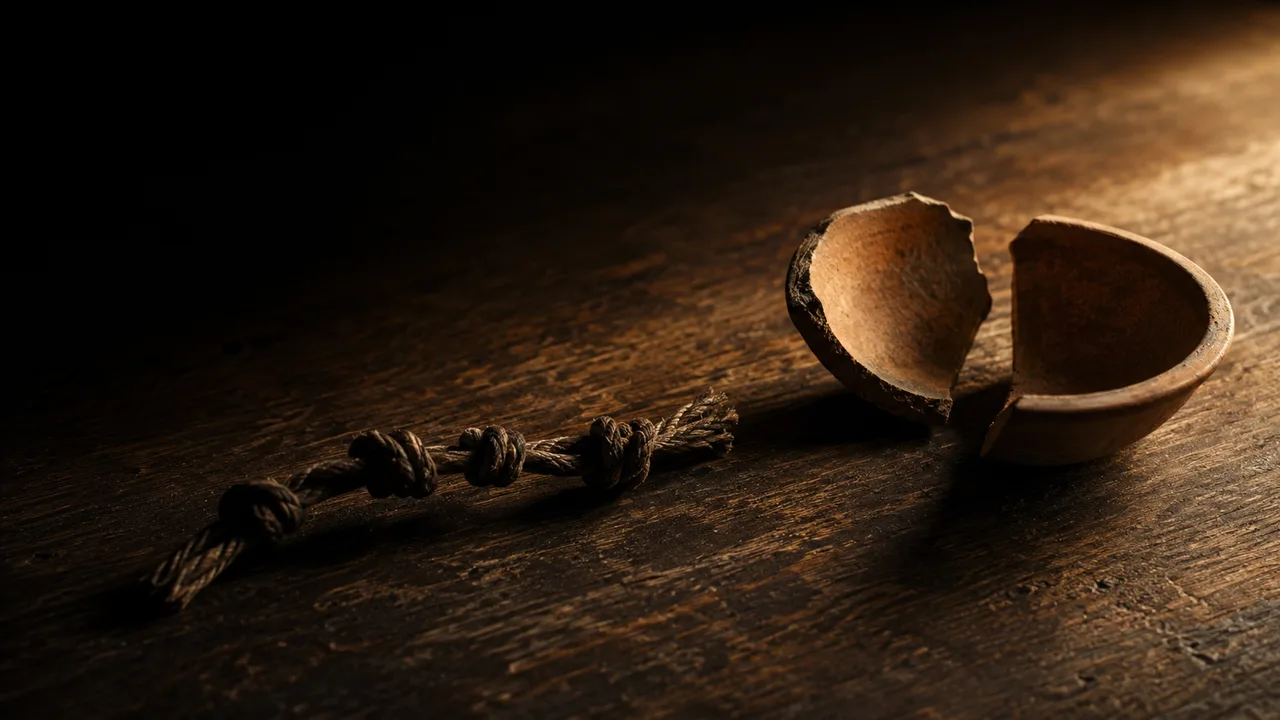
Sihr is real in the Quran, and it is also helpless. It cannot reach anyone except by Allah's permission, and the Prophet ﷺ named it a destroyer.
The magicians of Pharaoh threw first. Ropes and staffs hit the floor of that packed court, and to Musa (AS) they seemed from their magic to be moving, and he sensed fear inside himself (20:66 to 67). Then the answer came, and notice what it does not say. Fear not, indeed it is you who are superior. And throw what is in your right hand, it will swallow up what they have crafted. What they have crafted is but the trick of a magician, and the magician will not succeed wherever he is (20:68 to 69). He is not told that the floor is empty. He is told that what is on it will lose.
That is the whole position in one scene. Islam does not treat sihr as village superstition to be laughed off, and it does not treat it as a rival power to be feared. The Quran says it exists, says people learned it and sold themselves for it, and then puts a hard ceiling over it. Real and helpless at the same time. Most people carry only one of those halves, and the half they carry is usually the wrong one.
Everything sits inside one long verse. And they followed what the devils had recited during the reign of Solomon. It was not Solomon who disbelieved, but the devils disbelieved, teaching people magic and that which was revealed to the two angels at Babylon, Harut and Marut. But they do not teach anyone unless they say, we are a trial, so do not disbelieve. And yet they learn from them that by which they cause separation between a man and his wife. But they do not harm anyone through it except by permission of Allah. And they learn what harms them and does not benefit them. But they certainly knew that whoever purchased it would not have in the Hereafter any share. And wretched is that for which they sold themselves, if they only knew (2:102).
Read the middle clause again. They do not harm anyone through it except by permission of Allah. Ibn Kathir gathers the early readings of that line in his commentary, and they all land in the same place. Sufyan ath-Thawri reads it as Allah's appointed term. Al-Hasan al-Basri puts it plainly, that sorcerers never bring harm to anyone except by Allah's leave, and that He saves whom He wills from them. Nothing in that clause is a loophole. It is a leash.
The verse also clears a name. Sulaiman (AS) was a prophet who ruled with wind and jinn under his command, and after he was gone the story circulated that he had ruled by sorcery. Ibn Kathir records an account of how the rumour started, books of soothsayers buried in his lifetime and dug up by a later generation who were told this was the secret of his kingdom. The Quran answers the slander directly. It was not Solomon who disbelieved.
The same verse names Harut and Marut at Babylon. Accounts differ about who they were. Ibn Kathir reports that many of the early scholars held they were angels sent down, while at-Tabari read the verse as denying that magic was sent down to them at all and concluded they were two men. What no account disputes is the sentence they said first. We are a trial, so do not disbelieve. Nobody who learned from them walked in blind. They were told what the thing was before they touched it, and they touched it anyway.
Abu Hurayra (RA) narrated that the Prophet ﷺ said, avoid the seven great destructive sins. The people asked, what are they, Messenger of Allah ﷺ. He said, to join others in worship along with Allah, to practise sorcery, to kill the life which Allah has forbidden except for a just cause, to consume interest, to consume an orphan's wealth, to flee from the battlefield at the time of fighting, and to accuse chaste believing women who never even think of anything touching chastity (Sahih al-Bukhari 2766, Sahih Muslim 89).
Look at the order. Sihr is second. It comes immediately after associating partners with Allah and before murder. Whatever a person imagines he is buying when he goes looking for it, the price is stated in the verse above, no share in the Hereafter, and the transaction is described as selling yourself.
Aisha (RA) narrated that a man of Bani Zurayq named Labid ibn al-A'sam worked magic on the Messenger of Allah ﷺ until he began imagining he had done a thing he had not really done. One day or one night, while he was with her, he made du'a, and made it for a long time, and then said, Aisha, do you know that Allah has instructed me concerning the matter I asked Him about. Two came to him, one sat near his head and the other near his feet. One asked what ails this man. The other said he is under the effect of magic, and named who had done it, and named where the thing lay hidden.
He went out to the place with some of his companions. When he came back Aisha (RA) asked why he did not bring it out and show the people. He said, since Allah cured me, I disliked to let evil spread among the people. Then he ordered the place filled in with earth (Sahih al-Bukhari 5763).
Sit with the ending. The cure did not arrive through a counter-ritual. It arrived through du'a and through Allah answering it. And the one man on earth who could have held the evidence up in front of everyone chose to bury it instead, because putting it on display would have spread the thing rather than ended it. The narration is also precise about what it did to him. It made him imagine he had done something he had not done. It claims nothing beyond that.
Two short surahs sit at the very end of the Quran and are pointed straight at this. Say, I seek refuge in the Lord of daybreak, from the evil of that which He created, and from the evil of darkness when it settles, and from the evil of the blowers in knots, and from the evil of an envier when he envies (113:1 to 5). Then, say, I seek refuge in the Lord of mankind, the Sovereign of mankind, the God of mankind, from the evil of the retreating whisperer, who whispers evil into the breasts of mankind, from among the jinn and mankind (114:1 to 6).
Aisha (RA) described what he ﷺ did with them. Every night when he went to bed he would cup his hands together, blow into them after reciting al-Ikhlas, al-Falaq and an-Nas, and then wipe his hands over what he could reach of his body, starting with his head and face, three times over (Sahih al-Bukhari 5017). Sa'd (RA) narrated that he ﷺ said, whoever eats seven Ajwa dates every morning will not be harmed that day by poison or magic (Sahih al-Bukhari 5445).
Notice what is absent from all of it. No hunting for the person responsible. No going to anyone. The protection is a mouth moving in the dark and two hands over a chest.
When the ropes were writhing and the crowd was gasping, Musa (AS) said, what you have brought is magic, indeed Allah will expose its worthlessness, indeed Allah does not amend the work of corrupters (10:81). The magicians in that court saw it happen and fell into prostration, and the men who had come to defeat him said they believed in the Lord of Harun (AS) and Musa (AS) (20:70). That is how the Quran ends the scene every time. Not with the magic winning, and not with the magic being imaginary either. With it collapsing in front of the people who trusted it most.
So the fear is misdirected. Something with no power except by His permission is not the thing that should be keeping you awake. What should is the second name on that list of seven, and how casually people go looking for it.
Silsila Research Desk
Grade: Sahih · 7 min read